Photo: Sabesp/disclosure
The risks of extreme weather events have increased in several countries, mainly due to global warming. Studies estimate that economic damage from floods could double worldwide and from droughts could triple in Europe and China if the Earth's average temperature rises by 2°C.
+ Expert warns of global cooling trend in the next 15 years
+ Agriculture Confederation presents proposals for COP27 negotiations
A survey with the participation of 91 scientists from several countries, including Brazil, published in the journal Nature, shed some light on this discussion. The group analyzed a series of climate events recorded in recent decades around the world and further showed that risk management reduces the effects of floods and droughts. However, it has limited scope to minimize the impacts of consecutive occurrences with even greater magnitudes.
According to the study, if the second event is more intense than the first, the impact tends to be greater for the population when risk management fails to project extreme cases, such as river overflows or the rupture of dams and reservoirs, and/or is based only on previous episodes.
Environmental risk and impacts
“Environmental risk management needs to be revisited and seen as a niche of real opportunities. The path is challenging and full of opportunities, as in the case of Brazil,” Eduardo Mario Mendiondo, professor at the Department of Hydraulics and Sanitation at the São Carlos School of Engineering, University of São Paulo (EESC-USP), and co-author of the article.
Mendiondo is a researcher at the National Institute of Science and Technology for Climate Change Phase 2 (INCT-MC2), which is supported by FAPESP. He is also a mentor at the Water-Adaptive Design & Innovation Lab (WADILab) and is part of two Research Support Centers (NAPs) at USP: Incline (Interdisciplinary Climate Investigation Center) and Ceped (Center for Studies and Research on Disasters in the State of São Paulo).
The study was led by researcher Heidi Kreibich from the German Research Center for Geosciences (GFZ) in Potsdam, Germany. She is the coordinator of the Panta Rhei movement of the International Association of Hydrological Sciences (IAHS), a scientific organization for hydrology that turned one hundred in 2022. Over the past decade, the movement has sought to build regional and international alliances to provide a more integrated, multidisciplinary and inclusive view of the co-evolution of hydrological and social systems, such as decentralized water supply systems.
Coverage
In the global study, data from 45 pairs of extreme flood or drought events recorded in the same area with an average interval of 16 years between each other were analyzed. There are 26 paired flood events and 19 paired drought events in different socioeconomic and hydroclimatic contexts on all continents, which occurred between 1947 and 2019. One of the objectives was to verify how factors involved in risk changed between the first and second extreme episode and their subsequent impacts.
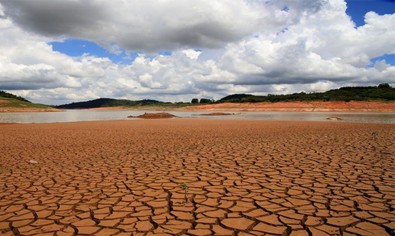
In the case of Brazil, researchers from EESC-USP developed studies on the water supply system of the Metropolitan Region of São Paulo, including the Alto Tietê and the Cantareira Basin. “Despite involving smaller rivers compared to other regions, such as the Amazon, the São Paulo system is extremely important not only because of the large number of residents served but also because of the synergy involving several sectors. By bringing new perspectives, the study promotes participatory, decentralized and more lasting solutions,” explains Mendiondo.
Scientific evidence
In São Paulo, scientists emphasize that the construction of reservoirs to contain the effects of droughts is essential for water security. However, its success depends on ongoing campaigns to popularize science and educational policies that encourage the rational use and reuse of water.
“Scientific evidence shows that if the reuse of rainwater had been planned in a safe and decentralized manner in the Metropolitan Region of São Paulo over the last 40 years, it would have been possible to live with the three major droughts of the 21st century without the need to build or expand large water reserve systems and without rationing in neighborhoods. This shows that the influence is not only the climate factor, but also the type of planning that is prioritized. It depends on the cultural co-evolution between water and society: without cultural awareness and [the cultivation of] better habits, the construction of more reservoirs could even lead to greater water consumption, increasing the risk of water deficits in the future and increasing a dangerous cycle of water insecurity. This is what is happening today in California [United States] and Shanghai [China],” observes the professor.
Above all, as an example, Mendiondo cites the result of another study published in February of this year comparing the droughts that hit the Metropolitan Region of São Paulo in 1985-1986 and in 2013-2015 (more extreme than the first).
The results showed that the delay in implementing public policies for decentralized rainwater reuse and the dependence of service areas on a few reservoirs exposed the region to greater vulnerability. Among the authors of this research are doctoral student Felipe Arguello de Souza and former EESC-USP students Guilherme Mohor and Diego Guzmán, all co-authors of the article now published in the journal Nature.
Stories
Of the 45 events analyzed in the new study, only two stories were considered successful, one in Barcelona and the other in Central Europe. However, two common factors stand out:
- Improving risk management governance, with greater integration into emergency management and early warning systems;
- And the implementation of a series of structural measures that required high investments, such as the construction of rainwater reservoirs and dikes.
Another point that scientists highlight as positive is the interdisciplinarity in dealing with these issues, including research, which can prevent science from being isolated or approached in “silos”, without open dialogue. An example of this interdisciplinary action is the encouragement of new risk transfer instruments, such as insurance indexed to climate change.
Risk issue
The researchers used risk concepts that consider impact as an outcome based on three factors:
- Danger;
- Exhibition;
- Vulnerability.
All three can be exacerbated by management deficiencies. The analysis assessed direct impacts (fatalities, monetary damage), indirect impacts (disruption of traffic or tourism) and intangible impacts (impact on human health or cultural heritage).
Hazard reflects the intensity of an event, such as a flooded area or drought deficit, measured by the standardized precipitation index. Exposure assesses the number of people and assets in the area affected by the event, i.e. changes in this factor are influenced by changes in population density and socioeconomic developments.
Exposure and vulnerability can be further exacerbated by suboptimal implementation of non-structural measures such as risk-aware regional planning or early warning.
About the author