Food cultivation, which currently has a high employment and production rate, is at risk of harm due to water scarcity. For agriculture, water is a critical resource and plays an important role in food security.
Feed 9 billion people by 2050 will require a 60% increase in agricultural production. In addition, there is an expected 15% increase in water capture.
According to Food and Agriculture Organization of the United Nations (FAO), pollution and resource scarcity are pushing the world’s major agri-food systems to breaking point. In some parts of Africa, many farmers are struggling with a lack of water for food production.
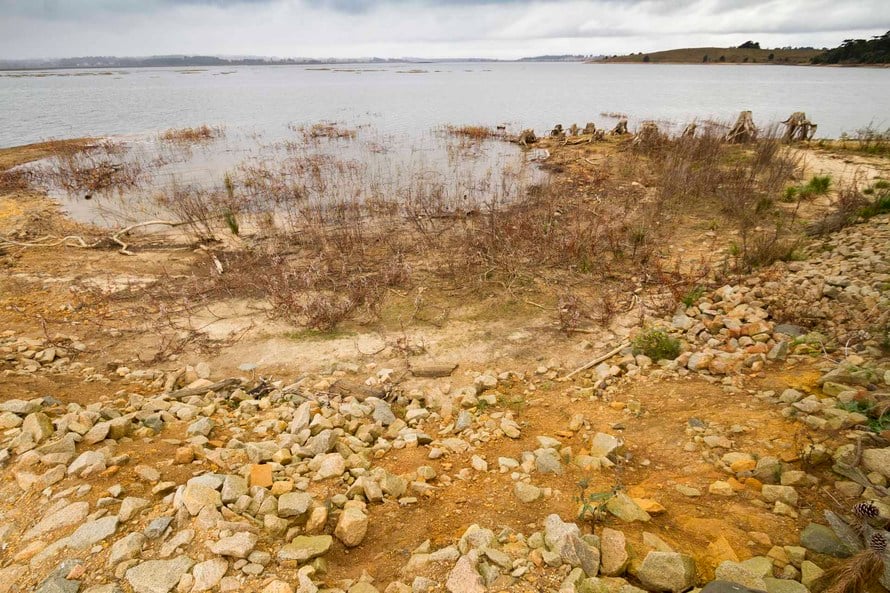
Photo: André Thiago/Sanepar
There are currently approximately 3,2 billion people worldwide living in agricultural areas with high to very high water shortages or scarcity, of which 1,2 billion people – approximately one-sixth of the world’s population – live in agricultural areas with severe water constraints.
Brazil
Over the past 37 years, Brazil has lost the equivalent of 17% of its water surface. Data from MapBioma – which is part of an annual mapping of land cover and use in the country – also indicates that the most affected region was the Pantanal, with a decrease of 80% between 1985 and 2021.
In Brazil, between 2000 and 2018 alone, there was a 55% increase in the volume captured from surface and underground sources for these uses. The National Water Agency (ANA) predicts that there will be additional 29% increase in agricultural demand by 2030.
Technology to combat scarcity
However, the issue of water preservation has already been addressed in a practical way by agricultural producers who want to avoid a shortage of the resource.
According to Fernando Silva, CEO of PWTech, a startup focused on purifying contaminated water, water plays a fundamental role in food security.
“With the increase in population and the demand for greater food production, the expectation is that there will be a 15% increase in water capture by 2050”, he explains.
As water availability in the field is not always the same, many farmers use technological tools to overcome difficulties, such as scarcity, with the aim of improving food quality and production.
One of these tools is the water purifier developed by PWTech. The technology eliminates 100% of viruses and bacteria and reduces up to 99,5% of particles present in water. In addition, the tool is adaptable to different energy sources and operates with low consumption. It is also portable and resistant to shaking and jolts.
“The equipment can be used in a concentrated manner, at a single water treatment point, or distributed at strategic points. The purifiers have plug and play technology and can start operating immediately,” says the specialist.
About the author