The role of engineers and agronomists in inspection is highlighted in the fifth episode of the fourth season of the series Sustainable Agronomy. The team traveled to Maranhão, Espírito Santo and São Paulo to showcase the work of these professionals in verifying the compliance of urban and rural projects.
In the Northeast state, mechanical engineer Wesley Costa has been superintendent of the Inspection sector of Crea-MA since 2019. “For example, we have the 'Swing, but not Fall' operation, from the Civil Chamber, where we inspect buildings with possible structural problems that could cause problems for society”, he explains.
According to him, there are also other operations required by the Electrical Chamber, such as the inspection of internet providers and radio and TV stations. By the second week of October this year, the Maranhão council had already carried out 7.804 inspection actions.
Tax agent Adão Júnior emphasizes that a work must have a technical manager, with the appropriate Technical Responsibility Notes (ARTs), as well as a sign indicating the name of the professional in charge.
How the agent acts in inspection
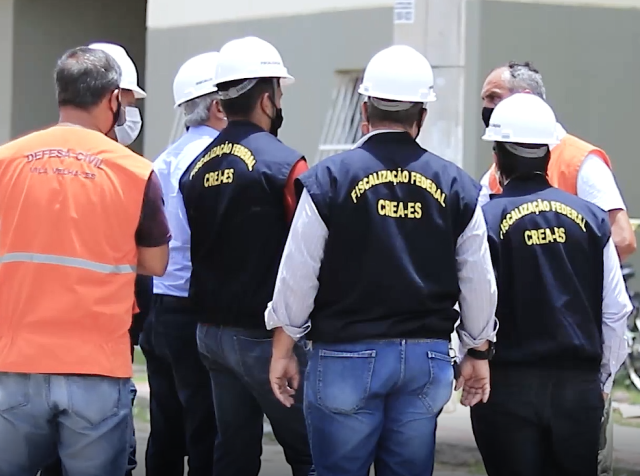
Crea-ES Inspection. Photos: Reproduction Canal Rural
The Sustainable Agronomy team also visited the construction site of a fuel storage terminal to demonstrate in practice the work carried out by Crea. Fiscal agent Joedson Martins says that, in this specific project, the ART for execution, related to the construction site, was missing. In fact, the documentation is the first aspect to be assessed by the professionals.
In addition to the structural part, technicians also need to be concerned about the impact on the surrounding area of the work. Civil engineer Robert Pedrosa recognizes the importance of inspection. “Having the support of Crea is essential for us to technically develop what is required, what we have learned in our profession […]”, he considers. The inspection work by the Council is carried out during all stages of the work.
Works in progress

In addition to ongoing works, Crea-MA also works preventively on works that have already been completed, generally in environments with a high flow of people, such as hospitals, shopping malls and hotels.
Just like in projects that are under construction, the first visit by inspectors to buildings that are already in operation is also for guidance purposes. “Normally, when you go to a project like this, you ask for reports on the air conditioning and electrical systems, always based on the issue of standards because they organize all of our Council’s actions,” says mechanical engineer Walter Machado.
When inspections are carried out on rural properties, it is up to the agents to assess environmental licensing and the proper disposal of pesticide containers. “When the inspector goes to a property, he does not only check the agronomy area, but also the civil area, whether there is a silo or warehouse construction, the mechanical area, who does the maintenance of the machinery, and also the electrical engineering issue, whether there are generators, substations […]”, explains agricultural engineer Jonalda Pereira.
Guiding and educational supervision
At Crea Espírito Santo, inspections operate in two ways: the pedagogical aspect aims to inform and guide those responsible for companies, and the punitive aspect is applied when all educational possibilities for regularizing the work or service have been exhausted.
The president of the Espírito Santo Council, Jorge Silva, says that in the past there was only fiscal inspection, that is, notary and tax collection. “[They checked] whether there was an ART, whether the professionals and companies had paid their annual fees, and if so, everything was fine. Not today, we have fiscal and technical inspections where we have engineers, we carry out multidisciplinary, technical inspections. We went from 23 thousand professionals duly active in the Crea to 41 thousand […]”, he says.
Crea's performance on rural properties
The program team also visited the interior of São Paulo to show how Crea operates in field inspections. In Araraquara, for example, sugarcane is the highlight. According to 2021 data from the São Paulo State Department of Agriculture and Supply, the region has an estimated production of R$6,2 billion.
Agronomist and tax agent for Crea-SP, Sandra Fernandes, explains that the work consists of requesting registration with the Council for the rural property or company and also the appointment of a technical manager. “This is what we most value and hope will happen in agriculture because the work of the technical manager is extremely important and makes all the difference for any company in this segment and for all other engineering and technology companies,” she states.
Importance of agricultural engineers on farms
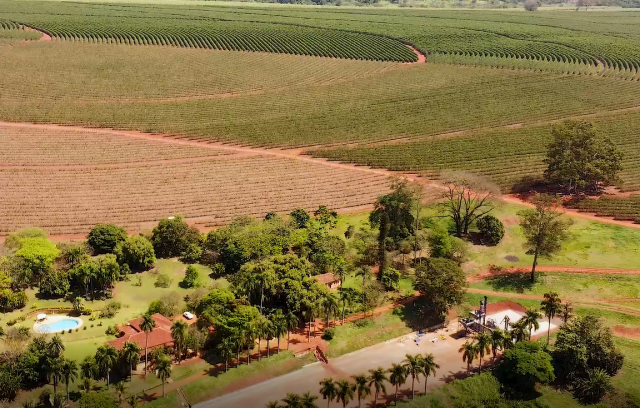
Farmer Francisco Malta manages one of the pioneering coffee-producing properties in the state of São Paulo. To keep up with the sector's developments, he has been relying on the technical assistance of agricultural engineer Denilson Pelloso for almost 15 years.
“The agricultural engineer, as the person technically responsible for the property, ends up paying attention to all production factors, from planning, planting, fertilization, pesticides and periodic visits to check for pests and recommend the correct pesticide recipe,” explains the professional.
Malta points out that rural producers are generally not agronomists and, therefore, must follow what the specialist recommends. “It’s like a doctor you visit because you have a headache and he recommends what you should take, that is, you can’t decide for yourself what to do, like self-medication. This happens a lot in agriculture too. So you need a technician to recommend the right product, at the right time and in the right quantity.”
Healthy eating: from farm to table
One of Crea's responsibilities is to ensure the production of healthy food through the work of responsible technicians. Sandra points out that the product that is being produced on the land goes directly to people's tables. “Technology advances at an absurdly fast pace and the agricultural engineer is the one who can inform and help so that this production is much better developed and, even, with financial results because engineering in general has this responsibility to the population, to society in a way that, often, not even it can measure”, she notes.
The next episode of the Sustainable Agronomy series will highlight the role of women in the job market and in the leadership of the Regional Engineering and Agronomy Councils.
The Sustainable Agronomy program is an initiative of the Federal and Regional Council of Engineering and Agronomy (Confea and Crea), Mútua and Canal Rural. The episodes will air at Saturdays at 9am, with reruns on Sunday, at 7:30 am (Brasília time). But it is also possible to follow all of them, from the first season, on project website.
About the author