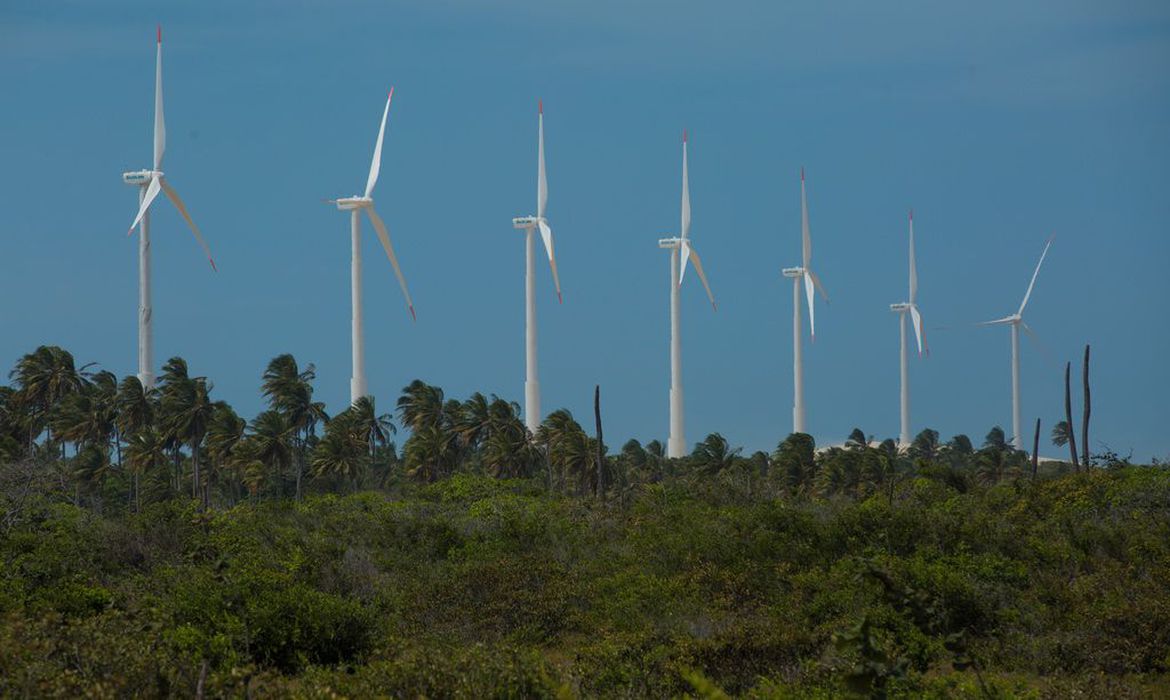
Photo: Wind Power Plant (UEE) in Icaraí, Ceará (CE)
Considered “the fuel of the future”, “green hydrogen” could have one of its greatest successes in Brazil players (reference in a given segment). It is not yet possible to estimate how much this commodity could add to the country's economy.
According to experts consulted by Agência Brasil, Brazil's good conditions for producing this energy source are already taken for granted. This source is increasingly attracting the interest of other countries.
+ Europe is clearing forests to secure energy
+ Germany: 65 billion euros in investments to ease energy costs
Interest in this fuel, whose main characteristic is an environmentally friendly production process, has also increased due to the energy security risk facing the European continent in the current war scenario, since a large part of its countries depend on gas exported by Russia.
Renewable sources
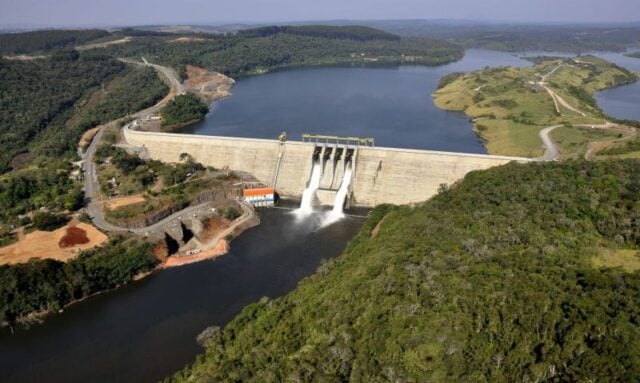
Photo: Mauá hydroelectric plant/Disclosure
The term green hydrogen occurs when the electricity used in the electrolysis of water comes from renewable energy sources. In other words, wind, photovoltaic and hydroelectric energy, explains the director of Hydrogen Technology at the Brazilian Association of Energy from Waste and Hydrogen, Ricardo José Ferracin, who is also an adjunct professor at Western Paraná Universityá. In addition to being one of those responsible for implementing the Hydrogen Research Center at the Itaipu Plant.
According to the executive superintendent of the Brazilian Hydrogen Association (ABH2), Gabriel Lassery, green (or renewable) hydrogen can also be obtained from hydroelectricity and waste biomass.
“Given the country’s agricultural power, there is a lot of biomass available for hydrogen production. Brazil also has places where it is possible to find natural hydrogen waiting to be extracted,” he says.
Market

Photo: Marcello Casal Jr./Agência Brasil
Lassery points out that gas is already widely used for industrial purposes in Brazil, mainly in oil refining and fertilizer production.
“The expansion of this economy will develop other possibilities in the domestic market. Some examples are in mobility, for the generation of energy on board electrified vehicles; in the steel industry, for the reduction of emissions in steel production; and in energy production, to mitigate intermittency in the area of renewable energy,” says the superintendent.
On the international scene, he adds, the hydrogen market has been structuring itself “in leaps and bounds”. “Countries with less availability of renewable energy aim to import renewable and low-carbon hydrogen from producing countries, to decarbonize their matrices. However, new initiatives to structure these businesses are frequently discussed”.
Production in Brazil
According to Ferracin, the country's installed generation capacity is around 180 GW with just the projects under analysis, but this capacity can be doubled, giving Brazil a leading role in the sector.
“There are obviously technological and investment bottlenecks that must be carefully analyzed, but positive expectations are high,” he says, citing the fact that the country does not manufacture electrolyzers and fuel cells as an example of a bottleneck. “The production chain for the equipment needs to be developed and there is a need to train human resources, especially technicians.”
Lassery also says that, currently, most of the hydrogen produced in Brazil is done captively (in the same place where it will be consumed) and that its energy sources, in general, are not renewable.
“However, Brazil has immense potential for renewable hydrogen production. In several parts of the country, its potential for solar and wind energy production is among the largest in the world, and new projects and memoranda of understanding for wind and solar energy production are frequently announced, both in Brazil and abroad.” offshore accounts [wind turbines installed offshore] how much Onshore [on the continent] with the aim of producing hydrogen,” he adds.
Transport
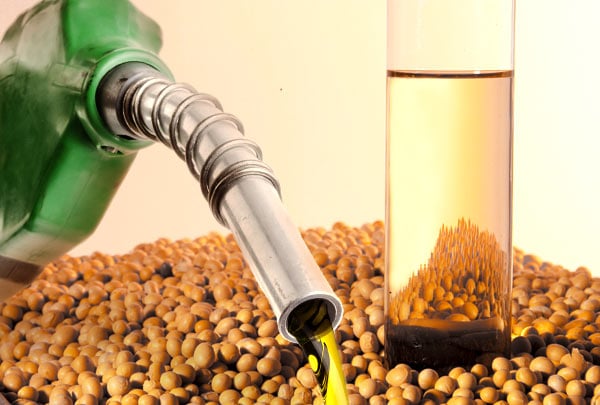
Fuel. Photo: Pixabay
Experts explain that, in order to guarantee hydrogen's green label, it is also essential that it is not transported in vehicles that use fossil fuels. According to Lassery, all stages of the hydrogen production and transportation process must use exclusively renewable energy.
“Since hydrogen is already produced and transported today, the ways to handle it safely are known. However, new standards, codes and norms are created and revised as the technology develops,” he says.
According to Ferracin, green hydrogen can be transported under high pressure, inside cylinders, and as a liquid, under high pressure and low temperatures. It can also be transported in “metal hydrides”. In this case, it is mixed with other metals and can then be transported in solid form, which guarantees greater safety.
“The most commonly used form is under high pressure, but there is technological evolution mainly in the form of metal hydrides. In this form of storage, hydrogen does not explode. A compressor, which is expensive, is also not necessary.”
He says that other possible forms of storage and transportation occur through the production of ammonia, which can even be used as fuel, both for the transport ship and for other engines. This substance can later be converted into hydrogen through chemical reactions.
Environment

Photo: André Kaskzeszen
In a world where the climate and environment have increasingly suffered the negative effects of the use of fossil fuels, green hydrogen appears as a solution that carries the possibility of adding benefits, both from an economic and environmental point of view.
For Lassery, this fuel has “the potential to decarbonize several activities that are currently largely responsible for carbon emissions”, such as the transport and energy production sectors.
It can also decarbonize “difficult-to-abate sectors,” such as long-distance heavy transport and the steel, cement and mining industries.
Economically, he adds, the hydrogen value chain is of great strategic importance.
“In addition to increasing energy security and reducing the need for imported inputs, the promotion of hydrogen also brings national scientific and technological developments, boosts the creation of new jobs, qualifies the workforce and inserts the country into this new international market, serving as a factor of reindustrialization”, he says.
About the author