Vegetable production is still an advantage
Is vegetable production still an advantage for small rural producers?
We are in a time of high costs for the end consumer of these products and if we turn to the producers, what is their reality?
Planting vegetables and selling them is an alternative for entrepreneurs in the countryside or in small rural areas, in the food industry. The producer can have this as their main activity or as an extra income, combining it with another activity.
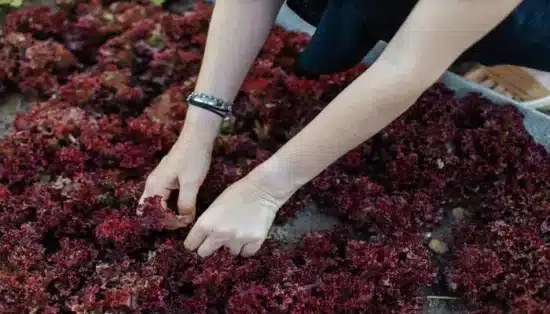
Here we list the vegetables that perform best in consumer sales. This way, you can choose the vegetable production that is suitable for your available space and location.
Lettuce
Lettuce is one of the most cultivated and consumed vegetables in Brazil and around the world. This vegetable comes in many varieties and types, varying in color, size and structure of the plant. Regardless of which type you plant, we can say that in Brazil the champion is curly lettuce, accounting for 50% of sales in the country. It is closely followed by smooth lettuce and American lettuce. However, there is a wide range of prices between types.
Some of them are resistant to temperature variations, and it is a good idea to research the most suitable one for your region.
Lettuce is usually harvested 55 to 130 days after planting, so the producer has a faster return on investment.
Carrot
Obviously, the part of the carrot that is consumed is its root, but several planting conditions interfere with its good development.
Sunlight is one of them. With a preference for direct sunlight, if the planting site is well lit, it also grows in partial shade.
Soil care is important, it must be deep, as it needs a lot of organic matter, light texture, pH between 6 and 7,5 and efficient drainage.
Planting irrigation must be constant, but without soaking.
Harvesting usually begins 60 to 120 days after planting.
Chives
Chives, widely used as seasoning, can grow up to 50 cm. They can be grown in partial shade or in direct sunlight.
In places with direct sunlight, it must be protected during the hottest hours.
The soil for chives needs plenty of organic matter, good drainage and a pH that varies between 6 and 7.
The ideal is to provide good irrigation, but without soaking the soil. Harvesting begins 75 to 90 days after planting the seeds or 60 days after transplanting the seedlings.
Tomato
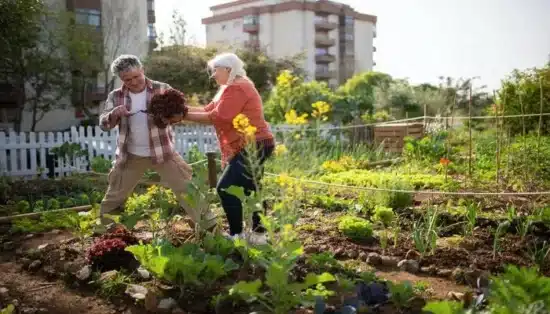
It is one of the most consumed fruits by Brazilians, and its market is guaranteed all year round. However, its cost is high in the markets, as is the cost of production, because it is subject to pests. The most sold varieties are the Italian tomato and the cherry tomato.
They need good fertilization and prefer high ground with good sunlight. For planting, you need sandy-clay soil, loose, well-drained and deep.
In Brazil, areas such as the Central-West, Southeast and Northeast plant throughout the year. In the South, from September onwards.
Tomatoes should be harvested 100 to 120 days after planting. They should not be ripe, as they continue to ripen after harvesting.
French Fries
Potatoes prefer sandy soils and are generally planted in winter and spring.
Planting is done using potatoes that have sprouted, but there are seedlings as well.
Harvesting can be done 90 to 120 days after sowing, when the branches begin to dry; in small areas, it is done manually.
Onion
Onions are very useful in the kitchen, so demand for them is high all year round.
Onion cultivation is not difficult and does not demand much from the producer. The cost is relatively low.
The planting site should have good lighting throughout the day. Light allows the bulb to grow healthily and properly.
The soil must be moist and the maximum temperature supported by the plantation is 25ºC. So evaluate whether your region is suitable for planting.
Harvesting takes place after 100 days of cultivation. In some cases, it can take up to 180 days.
Read also Agro Business
About the author